When a tree has to come down in the Northland, the hard part is rarely “finding someone with a chainsaw.” The hard part is getting the tree on the ground without hitting a roof, a fence, or a service line, then getting the wood and brush off the lot. Call (816) 837-4103 or use the free estimate form for a free estimate from a local tree pro who works in Clay and Platte counties.
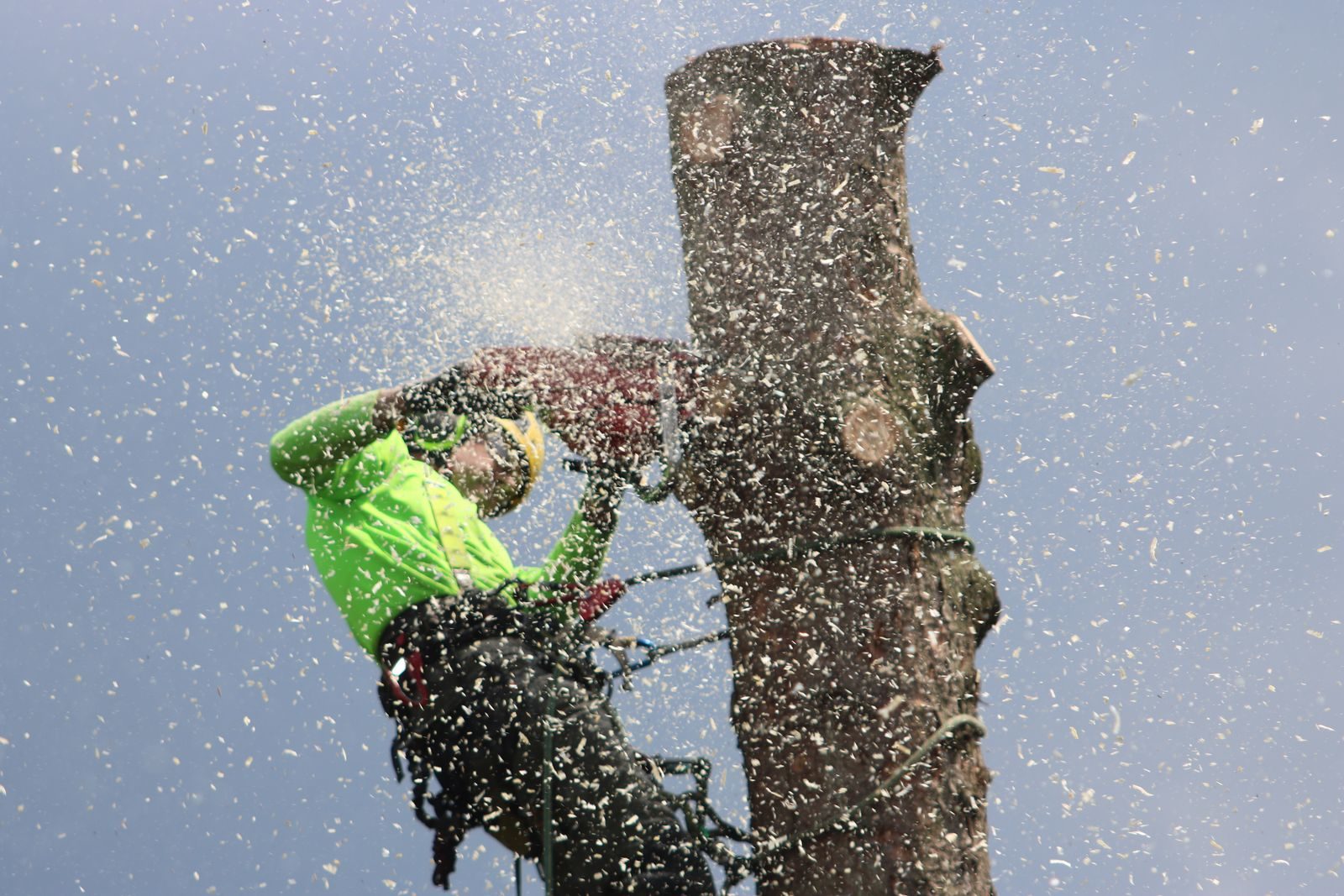
We take tree removal requests in Liberty, Gladstone, North Kansas City, Kearney, Smithville, Parkville, Platte City, and Excelsior Springs.
When removal is the right call
Not every problem tree needs to be cut down. A healthy oak with a few dead branches may only need trimming. Removal is the better conversation when:
- The tree is dead, or most of the crown is dead.
- It is leaning toward a house, driveway, or play area and the lean is worsening.
- There is a long crack in the trunk, a split crotch, or a cavity you can see from the ground.
- Roots are heaving a sidewalk or foundation, or the tree was undercut by grading or a new driveway.
- It is a green or white ash with emerald ash borer decline. EAB was confirmed in Platte County in 2012 (including a find near Parkville) and detected in Clay County in 2014. Untreated ash often fails from the inside out.
- A silver maple, ornamental pear, or other weak-wooded tree has already dropped large limbs and sits over a target.
- A storm left the tree hanging or hung up in another tree. That is also emergency work.
If you are unsure, say so. A careful pro will tell you if a prune will buy you years, or if removal is the safer spend.
What drives the price in this market
LocalGoingRate’s Kansas City guide (verified November 2026) puts a typical mid-size removal — about 30 to 60 feet, standard access, chipped and hauled — around $450–$1,200, with a typical figure near $800. Small trees can be closer to $150–$500. Large trees run higher, often $800 and up, and can go well into the thousands when the tree is over a house, on a slope, or needs a crane.
Other compiled Kansas City ranges for 2026 put general removals somewhere around $420–$1,860, and emergency removals higher still. Treat those as a planning band, not a bid.
What moves a Northland job up or down:
- Height and diameter. A 60-foot pin oak is a different job than a 25-foot ornamental.
- Targets. Over a roof in a tight Gladstone backyard costs more than an open side yard in Kearney.
- Access. Fences, gates, overhead lines, and wet clay after a storm all slow a crew down.
- Species and condition. A brittle, already-split silver maple can be more dangerous to take apart than a sound oak of the same size.
- Disposal. “Drop and leave the wood” is cheaper than full haul-off. Say which you want.
- Stumps. Stump grinding is almost always a separate line item. Ask for it on the same estimate if you want it done.
How a careful removal is done
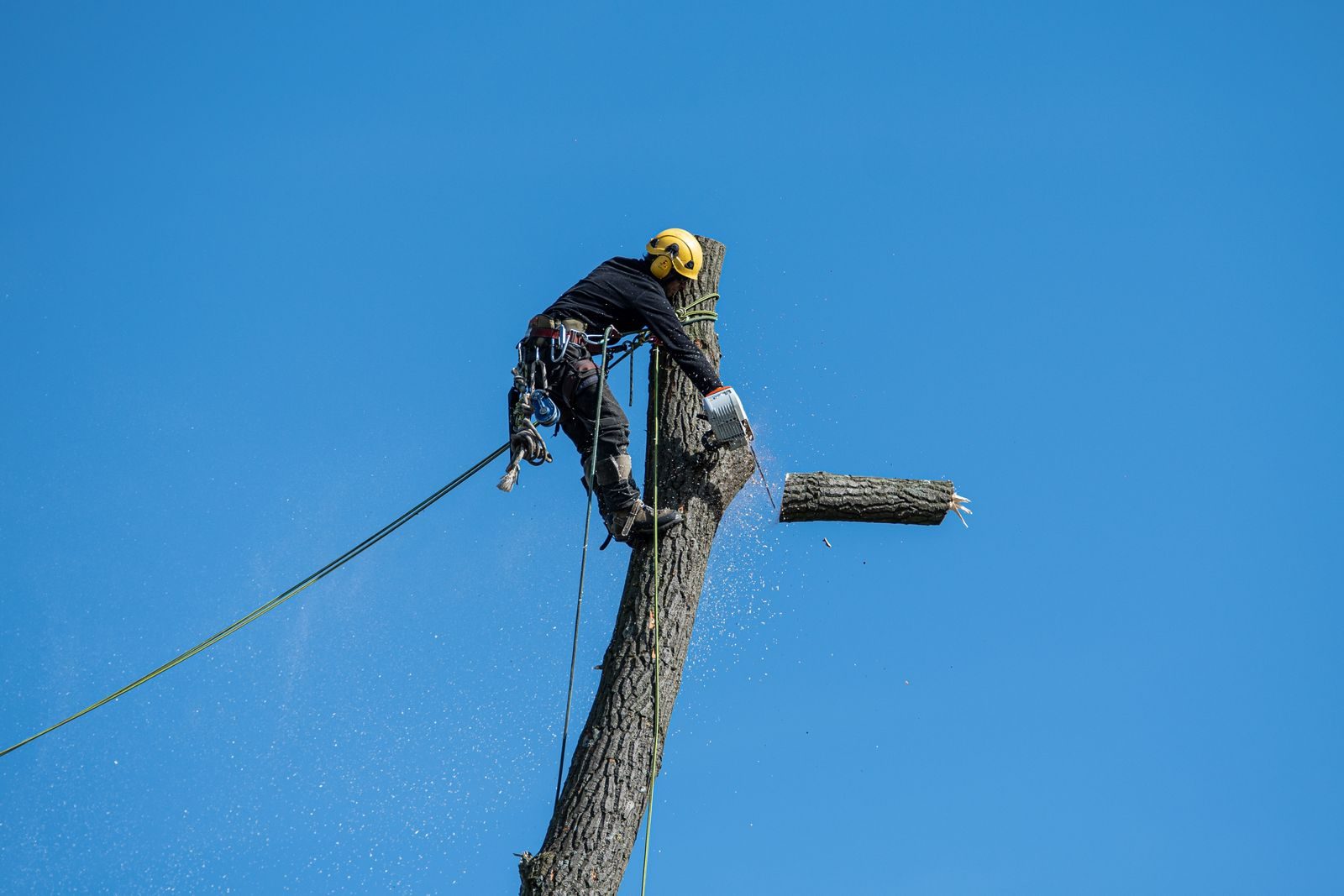
A typical residential removal is not a single cut at the base unless the tree can fall safely into open space. More often the pro will climb or use a lift, take the canopy down in sections, and lower heavy pieces with ropes. Brush is chipped. Logs are cut to a length you agree on, or hauled away.
You should get a written scope: what comes down, whether the stump is ground, who is responsible for turf repair, and whether the crew needs driveway or lawn access. If anyone suggests topping a tree as a cheap alternative to removal, read our trimming page first. Topping is a poor long-term practice and can make a tree more hazardous.
Permits, lines, and neighbors
Most private-yard removals in Northland cities do not require a city “tree permit,” but rules change when the tree is in the right-of-way, on a property line, or in an HOA subdivision (common in newer parts of Liberty and Kearney). Gladstone and North Kansas City both have public-tree and right-of-way rules. If the tree is between the sidewalk and the street, call the city before anyone cuts.
Stay away from service drops and any line that may be energized. If a line is down, call the utility or 911 first. Missouri One Call (811) is the right step before digging around a stump or installing a new tree, not usually before an above-ground removal, but the pro should still treat underground utilities carefully if a stump is coming out.
What to send with your request
Photos from two angles, a rough height (compare it to the house), your city, and whether the tree is near a structure or line will get you a faster estimate. Call (816) 837-4103 or request a free estimate.
FAQs
Can I leave the wood? Yes, if you want it for firewood and the logs can be left safely. Say that up front so disposal is not built into the price.
Will this kill the grass? Chippers, trucks, and dropped wood can mark a lawn, especially in wet Northland clay. Ask how the crew plans to protect the driveway and yard.
How soon can it be scheduled? Hazardous trees should be prioritized. Healthy trees that are simply in the way may wait longer, especially after a widespread storm.
Should I get more than one bid? For a large or expensive removal, yes. We can start with one local pro. You are free to compare written estimates.
Tree services are provided by independent local tree professionals. Price ranges are general estimates, not quotes.
Call (816) 837-4103 or request a free estimate.